 Safe mold removal in properties of any age
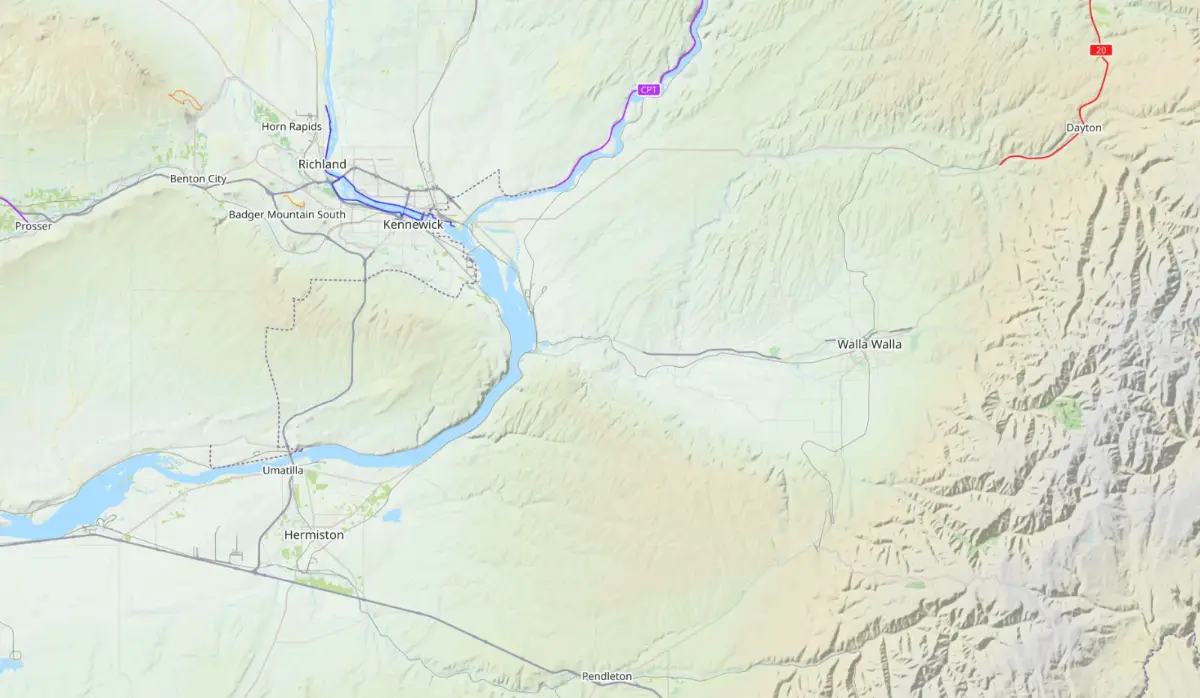
Headquarters · Arrival within about 1 hour
Walla Walla, WA
- Walla Walla
- College Place
- Dayton
- Waitsburg
- Pendleton, OR
- Milton-Freewater, OR
- Touchet
- Weston, OR
Walla Walla & Tri-Cities restoration
On call 24/7 · since 2012

★ 4.8 Google rating
A+ BBB rated

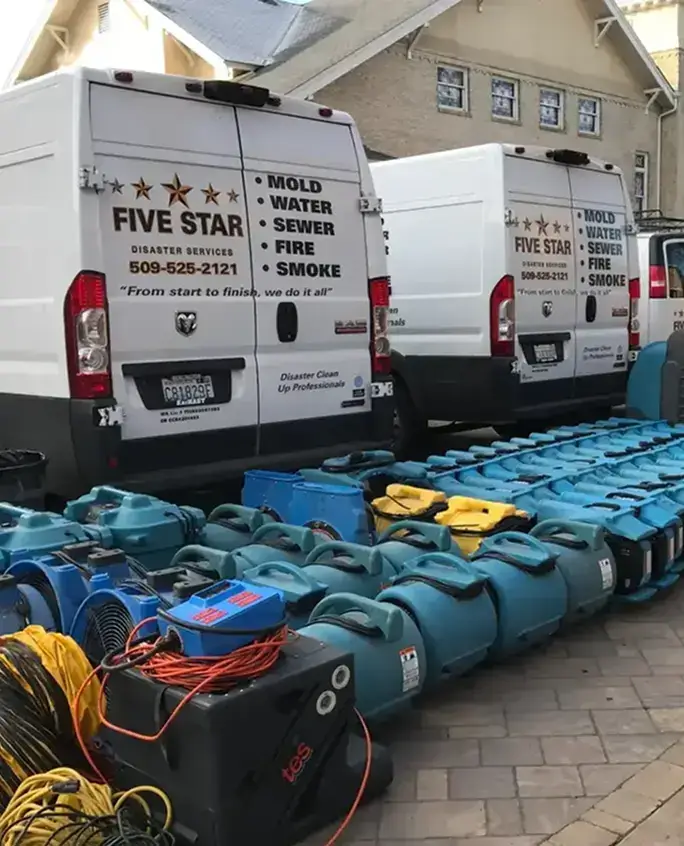
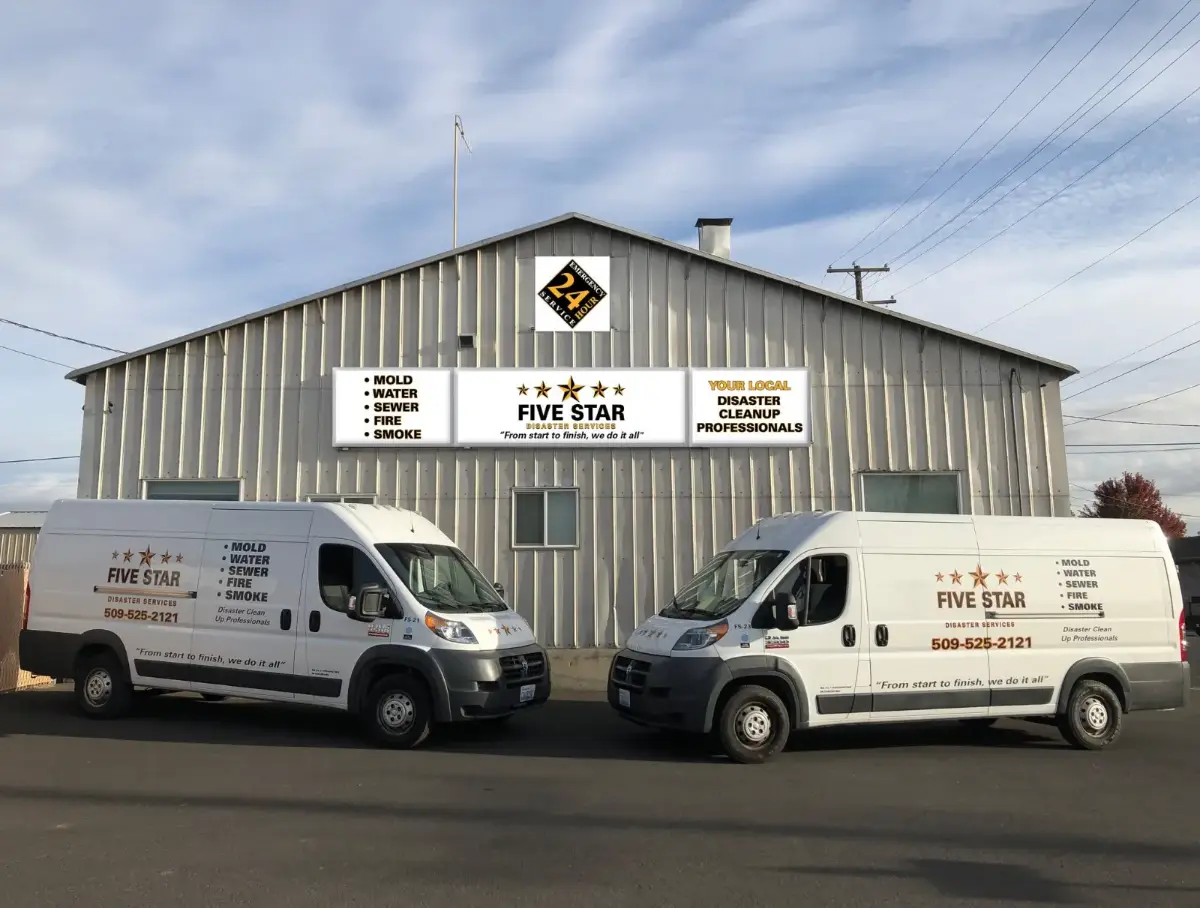
Five Star Disaster Services finds and removes mold in homes and commercial buildings across Walla Walla, the Tri-Cities, and Northeast Oregon. Once we’ve found it, we cut out what the mold has ruined, clean the surfaces worth keeping, and restore the rooms it reached.
Free inspection · We work directly with your insurance



Finding mold leaves you with questions about how much is hiding out of sight, what’s feeding it, and which parts of the wall or floor have to come out. We answer those questions before any work starts. Then our own crews remove the mold and make the repairs, so you aren’t hiring one company for the cleanup and another for the rebuild.
Our company and our technicians hold IICRC certification, which requires ongoing continuing education to maintain. The crew working in your home is trained in the latest mold remediation methods, so you receive the highest-standard work available.
Washington lists us under contractor license WA #FIVESSD870BS and Oregon under CCB #201493, and both state licensing offices will confirm that for anyone who asks. Our bond and insurance cover every stage, from containment through the rebuild, which protects you against mishaps during the work.
Readers of the Walla Walla Union-Bulletin have named Five Star Best of the Best eight times. That’s a vote from your neighbors, not a rating we gave ourselves, and it reflects how our family-owned company has worked in this community since 2012.
Mold removal is easier to live with when you know what’s coming. We follow the same steps on every mold job, from finding the moisture source to confirming the area is dry, so we miss nothing and remove the mold completely the first time.
Our first visit is a free inspection. We look at the visible mold and surrounding materials to see how far the growth reaches, then design a remediation plan that protects your people in the building and the property itself.
We start by finding what’s feeding the mold, whether it’s a plumbing leak, an irrigation line, or a damaged vapor barrier, and repair it before remediation begins, or the mold will come back. Moisture meters then show how far the water has spread into the surrounding materials.
Before removal starts, we enclose the work area so the rest of the building stays clean. The enclosure stays up until we’ve removed all the contaminated materials and the remaining surfaces have been cleaned.
With the area sealed off, we remove the moldy drywall, insulation, and any other materials too far gone to save. Framing that’s still structurally sound stays in place and gets cleaned, so you’re only rebuilding what the mold actually ruined.
Next, we clean the framing and any other surfaces that are staying. On framing, we often use dry ice blasting, which strips mold off wood without adding moisture. Air movers and dehumidifiers then run until moisture readings confirm the area is dry.
Once the area is dry, our construction and remodeling crew installs new insulation and drywall, replaces flooring that was removed, and finishes with paint, returning the room to its pre-loss condition. For insurance claims, we provide your adjuster with photos and an itemized estimate throughout the project.
Mold often traces back to a leak, a flood, a sewer backup, even a fire. We handle that damage too, along with the rebuild once we’ve remediated.
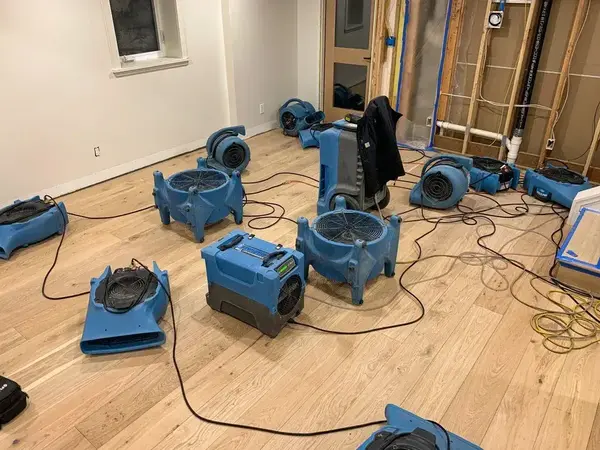
Drying the rest of the structure now keeps a recent leak or flood from starting a second mold problem later. If the materials around the growth are still wet, our water restoration crew dries them before mold can take hold there too.
Get water damage help →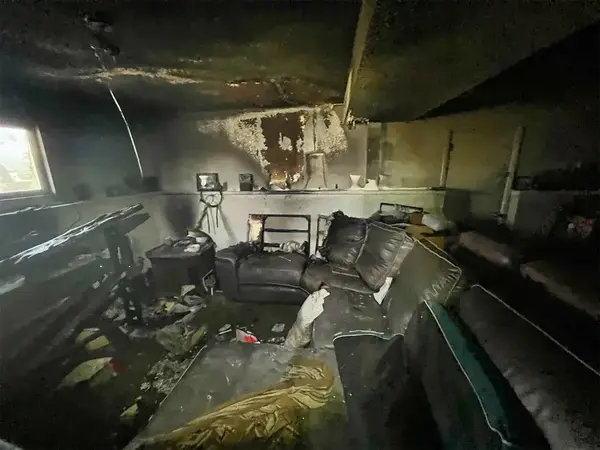
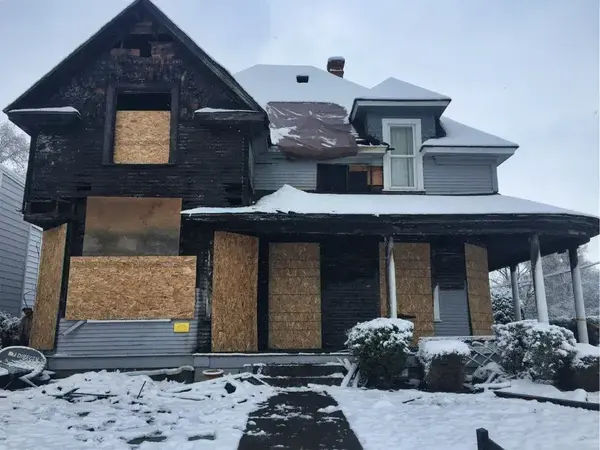
Water used to put out a fire can leave a building wet enough for mold to grow. When a property has both, we handle soot removal, smoke odor, contents cleaning, and mold remediation under a single plan, so one problem never holds up the other.
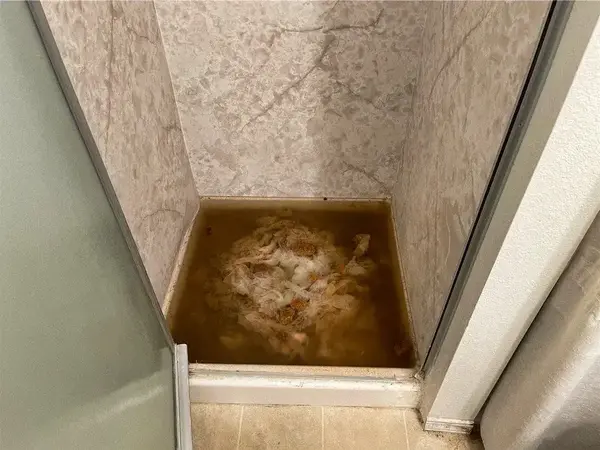
Mold that grows after a sewer backup or toilet overflow sits on materials contaminated with sewage, so removing the visible growth alone won’t make the space safe. We treat those materials as a sewage cleanup, with the protective equipment, removal, and disinfection the work requires.
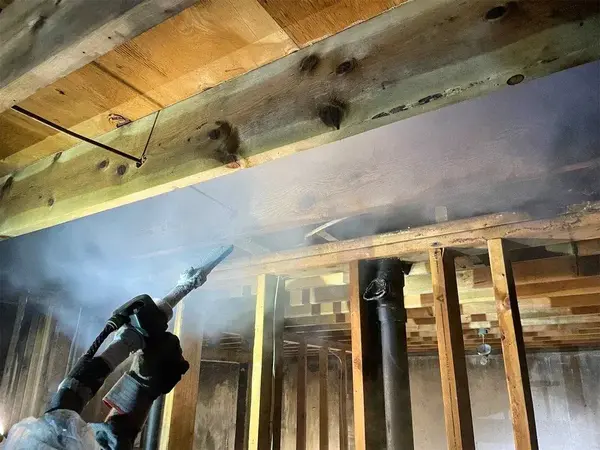
Dry ice blasting removes mold from framing without sanding, chemical cleaners, or water, so the wood comes through intact and stays dry. The pellets are made from recycled CO2 and turn to gas on contact, leaving no residue behind. It works on concrete and metal as well.
When mold has damaged studs, joists, or subfloor beyond cleaning, our construction crew replaces them as part of the rough carpentry, so your rebuild starts on solid framing. From there, we handle the insulation, drywall, flooring, and paint, without you having to hire a second contractor.
Give us a call to talk through the mold and any other damage you’ve found.
4.8 out of 5 stars
★★★★★
From 150+ Google reviews BBB A+ Accredited
Call our Walla Walla or Kennewick office to set up a mold inspection anywhere from College Place and Weston to Pasco and Richland.
Outside these towns? Call and ask. We also take jobs in Prescott, Lowden, Dixie, Irrigon, and Echo.

Usually not, if you can see the mold. Visible growth already tells us what has to come out, and since there’s no official safe level for mold, a lab number wouldn’t change the plan. Testing is most useful when mold is suspected but hidden, like inside a wall.
If the work area isn’t contained. Cutting into moldy drywall or pulling up carpet releases spores, and any that escape the work area can contaminate clean rooms. That’s why we contain our workspaces and keep them under negative air pressure with HEPA-filtered air, so air flows in from the rest of the building instead of out.
Mold grows into porous materials like drywall, ceiling tiles, insulation, and carpet, filling small spaces and crevices that cleaning can’t fully reach. That’s why we replace those materials instead of trying to clean them.
It depends on what the ducts are made of. Sheet metal ducts can be cleaned, even with heavy growth. Insulated ducts and fiberglass duct liner hold onto mold and moisture, so they need to be replaced. The system should stay off until the ducts are cleaned or replaced, since running it can spread mold through the building.
No. Paint over mold peels, and the mold keeps growing underneath. We remove the growth and dry the surface first, so the paint goes onto a clean, sound wall.
Not when the moisture behind it is fixed. Mold spores are in every home’s air and dust, but they only grow where materials stay damp. Once we’ve removed the growth, corrected the moisture source, and confirmed everything is dry, new mold has nothing to grow on.
A project coordinator will follow up to schedule a visit. Damage happening right now? Skip the form and call.
Kennewick and Tri-Cities: (509) 404-0613 · Open 24/7
Tell us about your circumstances.
We will call you back the same day during business hours.